The Battle for the Soul: Catholic Wisdom on Demonic Possession and Deliverance
Demonic Possession: Entry, Prevention, and Liberation in the Catholic Tradition
I. Introduction
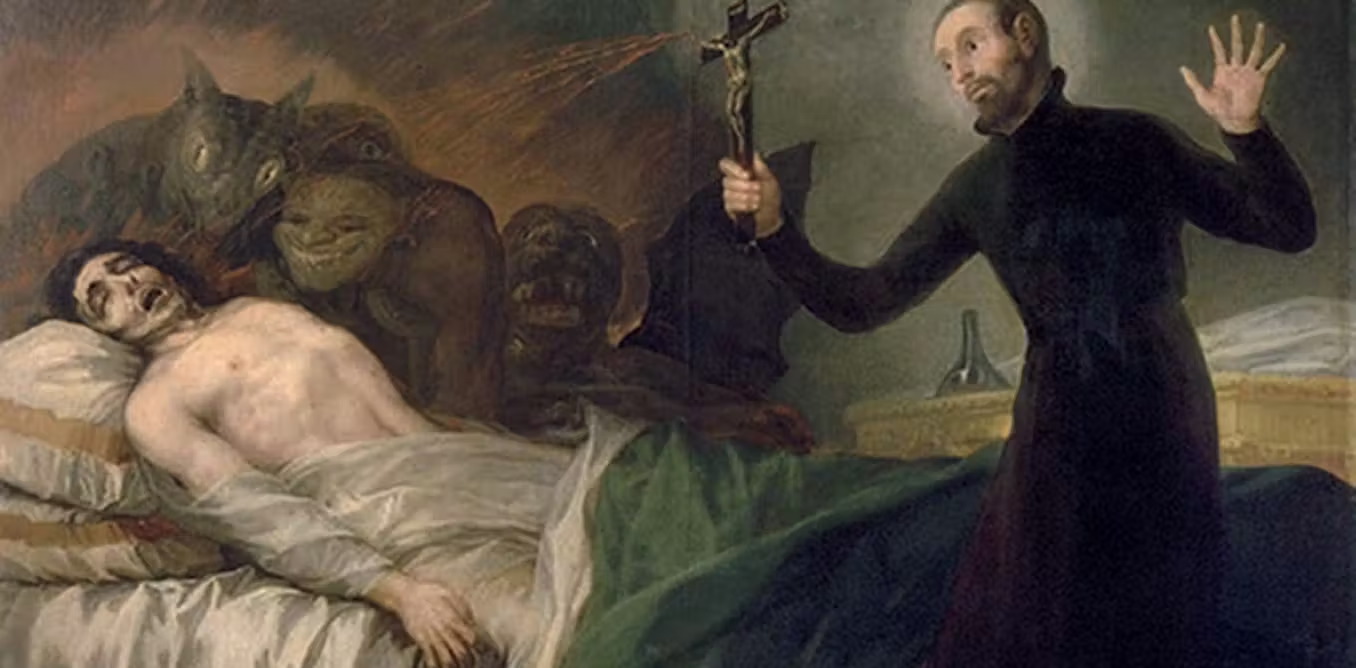
Demonic possession is a rare but real phenomenon recognized by the Catholic Church, where an evil spirit takes control of a person’s body without their full consent. While full possession is uncommon, the presence and influence of demons can manifest in various ways: temptation, oppression, obsession, and finally possession.
Key Distinction
Temptation: A universal experience; not a sin unless consented to.
Oppression: External attacks (e.g., misfortunes, illnesses).
Obsession: Intense mental attacks, intrusive thoughts.
Possession: Demon takes over bodily functions, speaks or acts through the person.
II. How Demons Enter a Soul
1. Grave Sin and Persistent Unrepentance
Mortal sin opens the soul to Satan’s influence.
“Do you not know that if you present yourselves to anyone as obedient slaves, you are slaves of the one whom you obey… either of sin, which leads to death, or of obedience, which leads to righteousness?”
—Romans 6:16
When a soul habitually chooses sin—especially grave sins like occult practices, sexual immorality, hatred, or blasphemy—it becomes spiritually vulnerable.
2. Occult Practices
Engagement in the occult is one of the most direct portals for demonic entry:
Ouija boards
Witchcraft
Tarot cards
Astrology
New Age meditation or energy healing (e.g., Reiki when detached from Christ)
Spiritism/seances
“There shall not be found among you anyone… who practices divination or tells fortunes or interprets omens… For whoever does these things is an abomination to the LORD.”
—Deuteronomy 18:10–12
3. Curses and Generational Sin
Some cases involve curses placed by others or sin patterns passed through generations.
“The iniquity of the fathers upon the children to the third and fourth generation.”
—Exodus 20:5 (interpreted spiritually)
4. Trauma or Abuse
Certain psychological wounds can become “entry points,” especially if the wounded soul turns away from God in bitterness, despair, or hatred.
5. Making Pacts with the Devil
Explicit invitations to Satan—often seen in satanic cults—grant demons full permission to enter.
III. Recognizing Demonic Influence or Possession
Signs of Possible Possession (from the Rituale Romanum and Church exorcists):
Speaking unknown languages
Extraordinary strength
Revealing hidden knowledge
Aversion to sacred objects
Loss of consciousness or memory during manifestations
Important: Psychological evaluation is always necessary to rule out mental illness. The Church requires this before any exorcism.
IV. How to Avoid Demonic Possession
1. Live in a State of Grace
Stay free of mortal sin through frequent confession and Holy Communion.
“Resist the devil and he will flee from you.”
—James 4:7
2. Prayer and Sacraments
Daily prayer: especially the Our Father, Hail Mary, Rosary, and Divine Mercy Chaplet.
Sacraments: Baptism, Eucharist, and Confession build spiritual armor.
Holy Water, blessed salt, and blessed sacramentals (e.g., Rosary, Scapular) drive away evil.
3. Devotion to the Blessed Virgin Mary
Mary is the terror of demons. Saints and exorcists consistently affirm her power.
“When the devil sees Mary, he flees as if from fire.”
—St. John Vianney
“The Rosary is the weapon for these times.”
—St. Padre Pio
4. Avoid Occult and New Age Practices
Do not give the devil legal ground. Even “entertainment” like horror films, supernatural games, or music invoking evil can attract demonic attention.
5. Regular Spiritual Reading and Protection
Reading Scripture and lives of the saints.
Wearing the St. Benedict medal, Brown Scapular, or Miraculous Medal.
V. Tools for Protection and Liberation
Deliverance Prayers (not the same as exorcism)
St. Michael Prayer
Anima Christi
Prayer of St. Patrick (Lorica)
Binding Prayers (e.g., “In the name of Jesus Christ, I bind any spirit attacking me…”)
Note: Laypeople should not address demons directly (except in private, low-level deliverance). Formal exorcism can only be performed by a priest authorized by the bishop.
Holy Objects and Places
Holy Water: Carry and use to bless your room/home.
Crucifixes in the home.
Sacred music and Gregorian chant.
“Blessed is the man who trusts in the Lord, whose trust is the Lord.”
—Jeremiah 17:7
VI. Teachings and Insights from the Saints
St. Thomas Aquinas
Taught that demons act through suggestion, but cannot move the will unless the person consents.
St. John Vianney
Fought literal battles with Satan while hearing confessions. Called confession “the soul’s bath.”
St. Teresa of Ávila
Saw demons flee when one invoked the Holy Name of Jesus with faith.
“I feared them no more than gnats.”
—St. Teresa of Ávila
St. Padre Pio
Endured physical attacks from demons but said, “The devil is like a mad dog tied by a chain… only if you approach does he bite you.”
VII. Final Words of Encouragement
“Be sober, be vigilant; because your adversary the devil, as a roaring lion, walks about, seeking whom he may devour.”
—1 Peter 5:8
“The light shines in the darkness, and the darkness has not overcome it.”
—John 1:5
Demons exist—but God is infinitely more powerful. A life rooted in Christ, nourished by the sacraments, and devoted to Mary is a fortress the devil cannot overcome.
Summary of Key Practices to Avoid Possession
| Practice | Purpose |
|---|---|
| Daily Rosary | Protection under Mary’s mantle |
| Confession (monthly or more) | Clean soul = closed door to demons |
| Frequent Communion | Spiritual strength and unity with Christ |
| Avoid Occult, Sin, and Evil Media | Keep demonic doors shut |
| Use Sacramentals | Holy water, medals, and blessings drive evil away |
| Invoke Saint Michael | Defender in spiritual battles |
| Consecrate your home | Through priestly blessings |